

Sample Framework
Manufacturing safety pilot framework
A sample rollout pattern for focused safety monitoring on a production line: which zones to start with, how rules are proven with supervisors, and what a weekly review should contain. Illustrative, not a customer account.
By VisraxPublished 13 Jul 2026Updated 7 Oct 20265 min read
01
Scope of the pilot
This framework describes how a focused safety pilot can be structured in a production environment. It is an illustrative pattern using example zones and outcomes rather than a report from a specific customer.
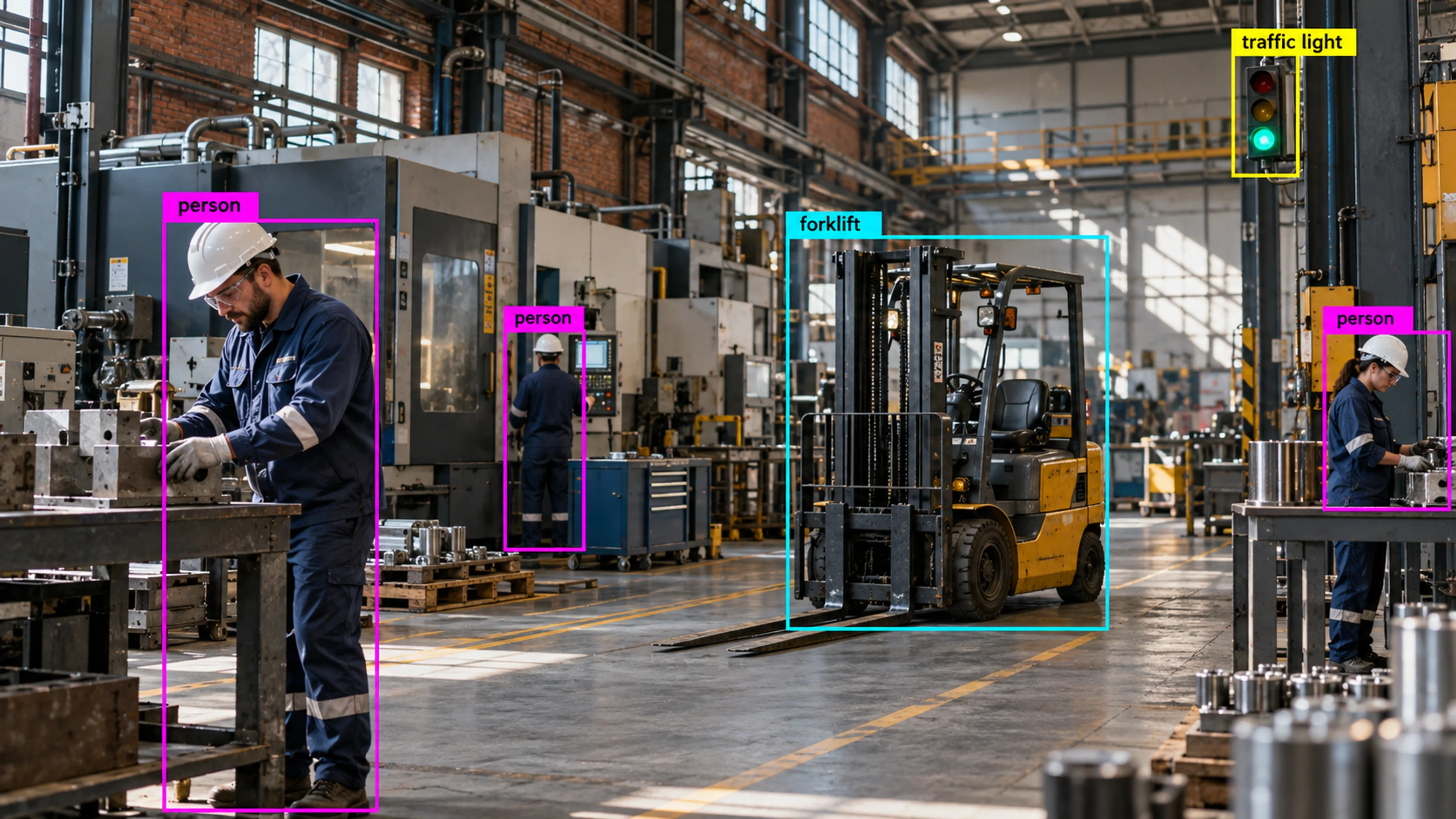
The pilot covers one production line and its immediate surroundings: the line itself, the forklift route that crosses it, a utility room and the staff entrance. Existing cameras cover all four. No hardware is added.
02
Choosing the first zones
The first zones are chosen with the line supervisor and the safety lead, using the question “where would an event matter most?” rather than “where do we have cameras?”.
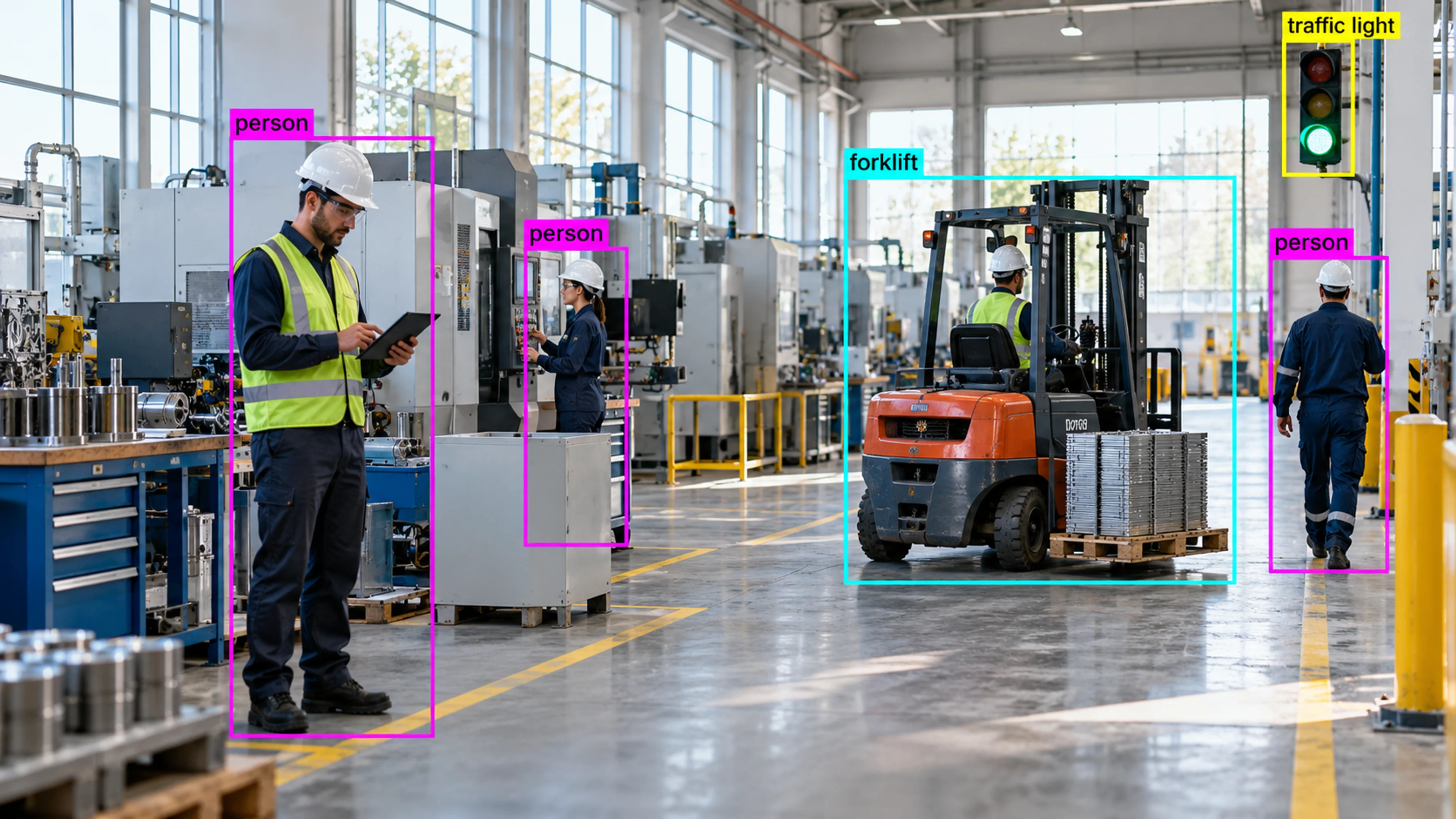
- Machine exclusion zone around the automated cell, restricted while the line runs.
- Forklift crossing where the route meets the pedestrian walkway, with a proximity rule.
- PPE zone at the line entry, requiring helmet and vest.
- Utility room, with a visual smoke indicator and an after-hours entry rule.
03
Proving the rules
Each rule is configured from recent footage and run in review mode for a week. Alerts go to the safety lead only, who marks each as a genuine event or expected activity. Minimum durations and schedules are adjusted so that, for example, a maintenance window does not generate exclusion-zone alerts.
At the end of the week the rules are reviewed with the supervisor who will receive them live. Only rules the supervisor trusts move to live routing. This step is what prevents the pilot from becoming a source of noise.
04
The weekly review
The weekly review is organised by zone rather than by alert. For each zone it asks how many incidents were raised, how many were genuine, how quickly they were closed and what, if anything, should change: the rule, the zone, the schedule or the physical layout.
In the example pilot, the forklift crossing produces the majority of genuine events. The review leads to a trial barrier and a change in the route, and the following weeks’ incident count becomes the measure of whether it worked.
05
Expanding beyond the pilot
Once the four zones are stable, the rule set is applied to the next line with its own zones drawn on its own cameras. Reports compare the lines on the same events. The utility-room pattern is reused for other plant rooms, and the PPE rule for other entries.
The pilot ends with a documented rule set, a review cadence and a list of zones for the next phase — and with supervisors who treat the alerts as part of running the line.