

01
Spinning-floor activity
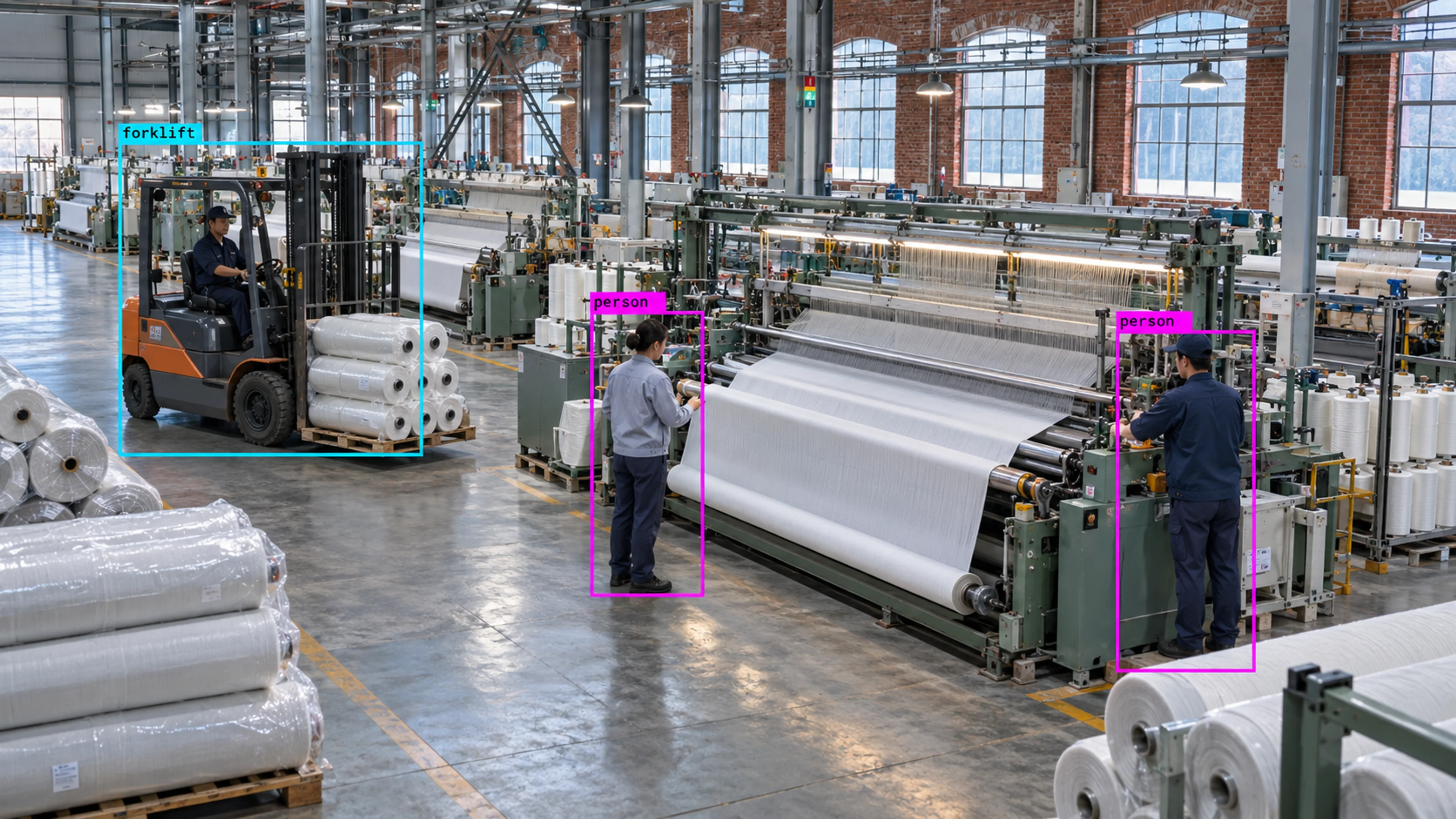
A zone beside a ring frame is restricted during operation. An entry raises an alert to the floor supervisor, who reviews the clip and records the outcome.
Industry
Monitor spinning, weaving, dyeing, finishing, packing, warehouses, utilities, entrances, and critical safety areas.
Textile Manufacturing
Illustrative environment · Textile manufacturing
Overview
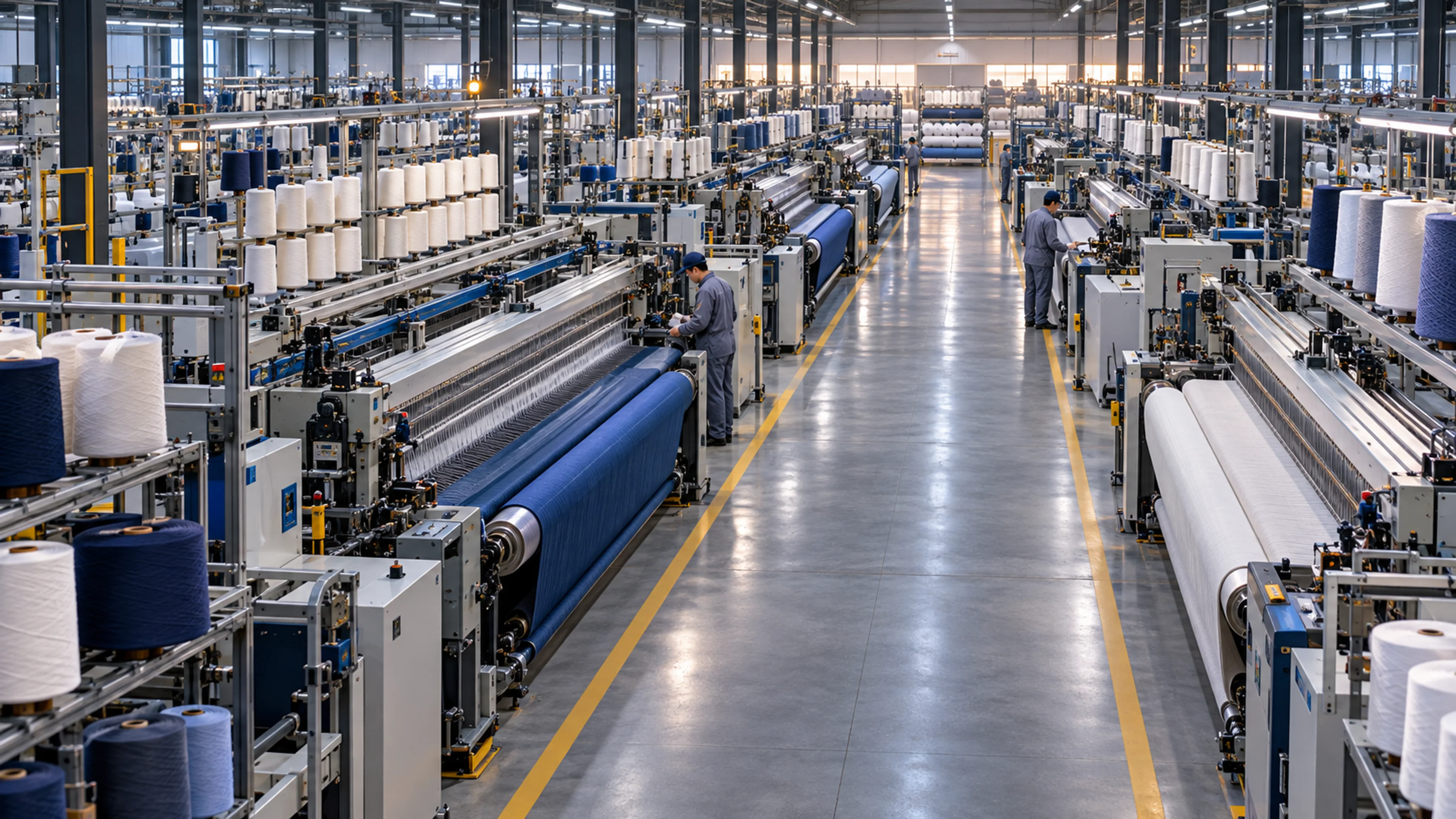
Textile mills run long production floors — spinning, weaving, dyeing, finishing and packing — with utility areas and warehouses alongside. Visrax connects to the cameras already covering these spaces to monitor safety zones around machinery, visual indicators of smoke in utility and storage areas, restricted-area entries and movement through packing and dispatch.
Configuration follows the mill’s own layout and shift schedule, and alerts are routed to the supervisor responsible for each area.
Long floors, continuous shifts and combustible material. Textile sites need eyes on every zone, not just the ones near the office.
What it does
Each part is configured around your cameras, zones and schedules — the same system, set up for the way your site runs.
Exclusion zones around spinning, weaving and finishing machinery with presence and PPE rules scheduled to shifts.
Visual smoke indicators and restricted-entry rules for boiler rooms, dye houses and chemical storage.
Forklift and worker movement in packing and finished-goods storage, with congestion and proximity alerts.
Vehicle and people flow at gates and staff entrances, including after-hours activity rules.
In practice
A zone beside a ring frame is restricted during operation. An entry raises an alert to the floor supervisor, who reviews the clip and records the outcome.
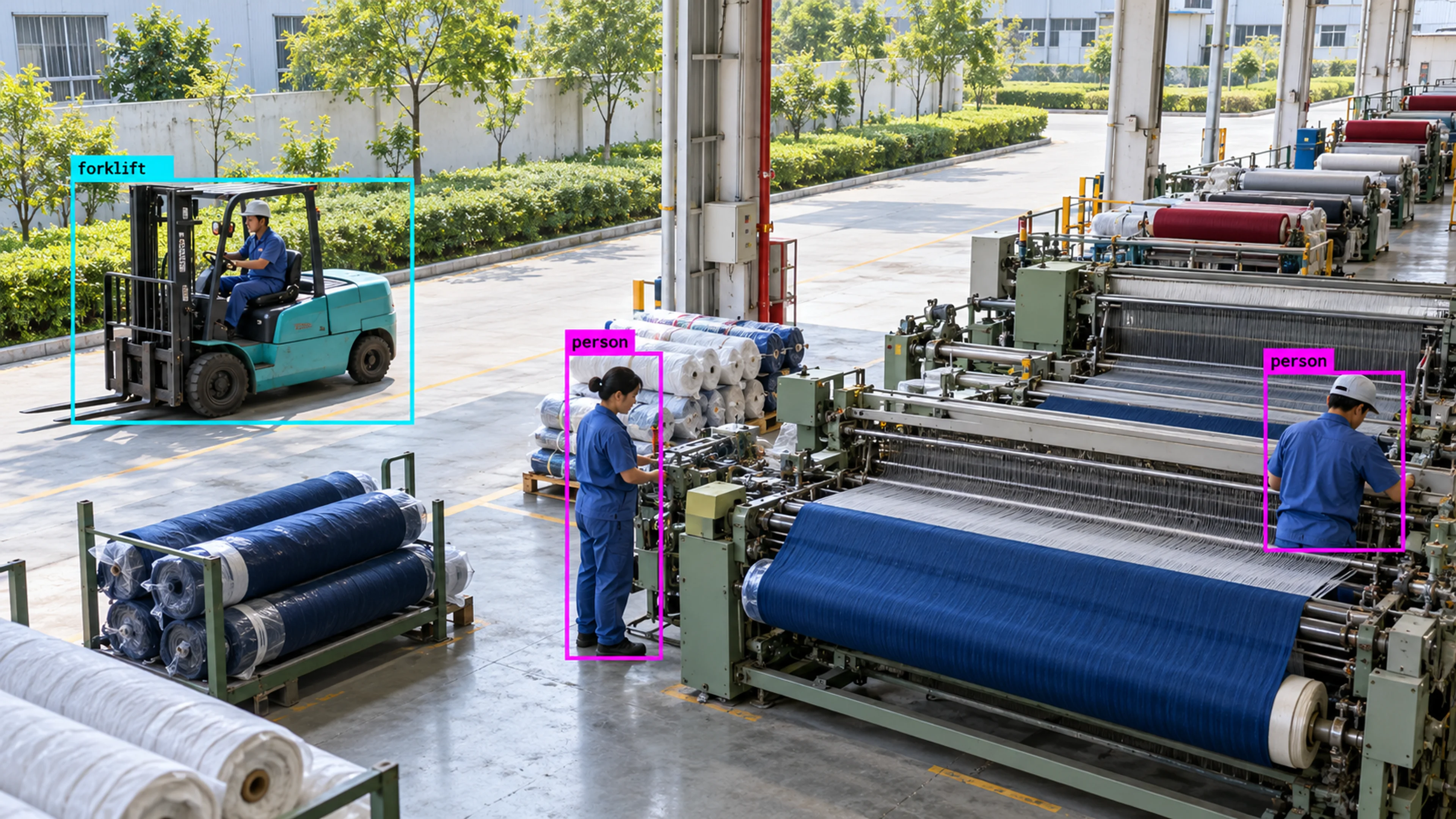
The dye house is monitored for PPE and for visual smoke indicators. A smoke indicator alerts facilities while the existing fire system remains the primary control.
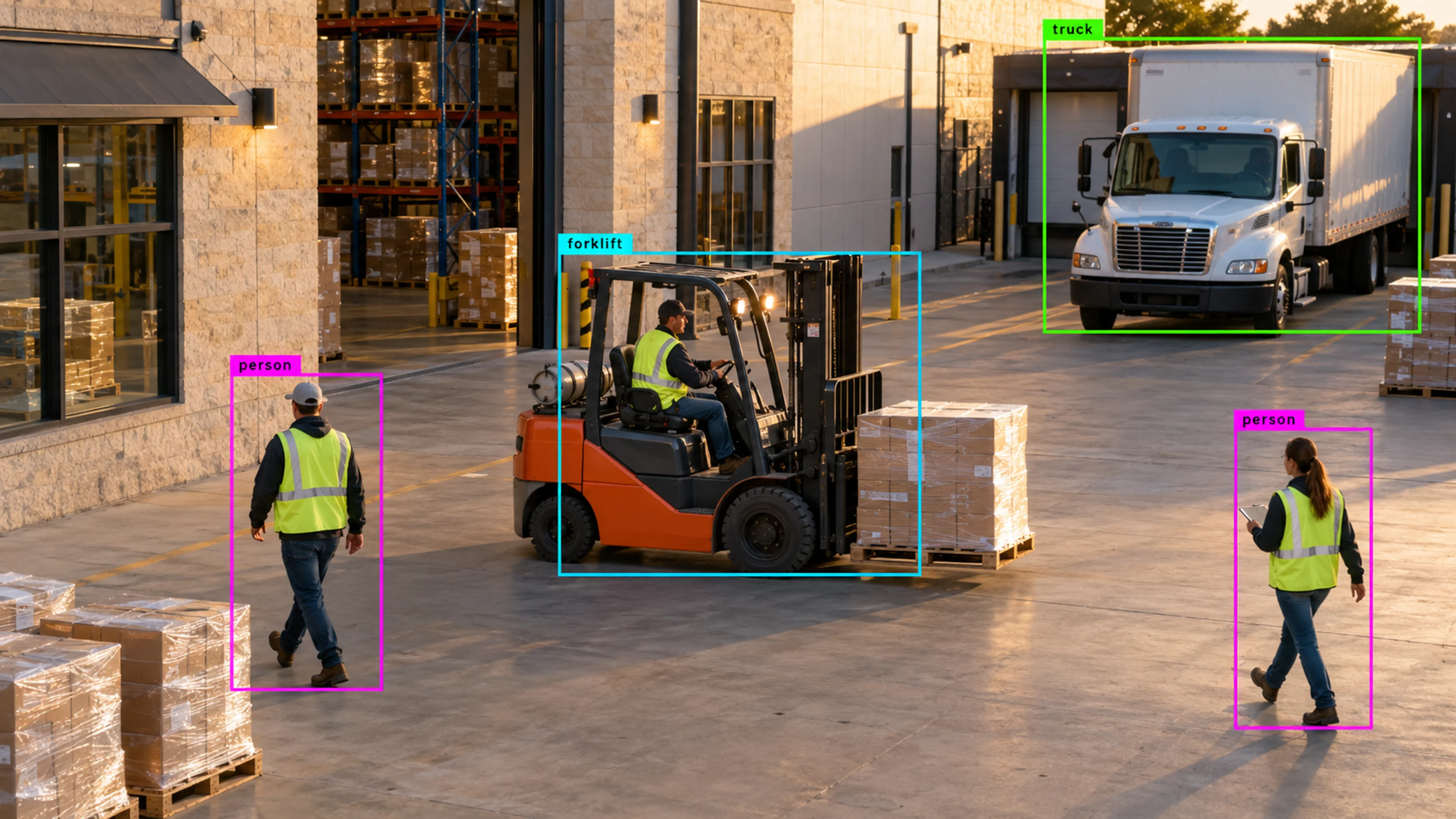
Forklift and worker paths in the packing area show a recurring crossing. A route change is made, and the proximity alert count is tracked afterwards.
Questions
Straight answers about how this is configured, what it needs and what it does not do.
Next step
Tell us about your sites and what you need to catch. We will walk through a setup that fits the way your operation runs.