

01
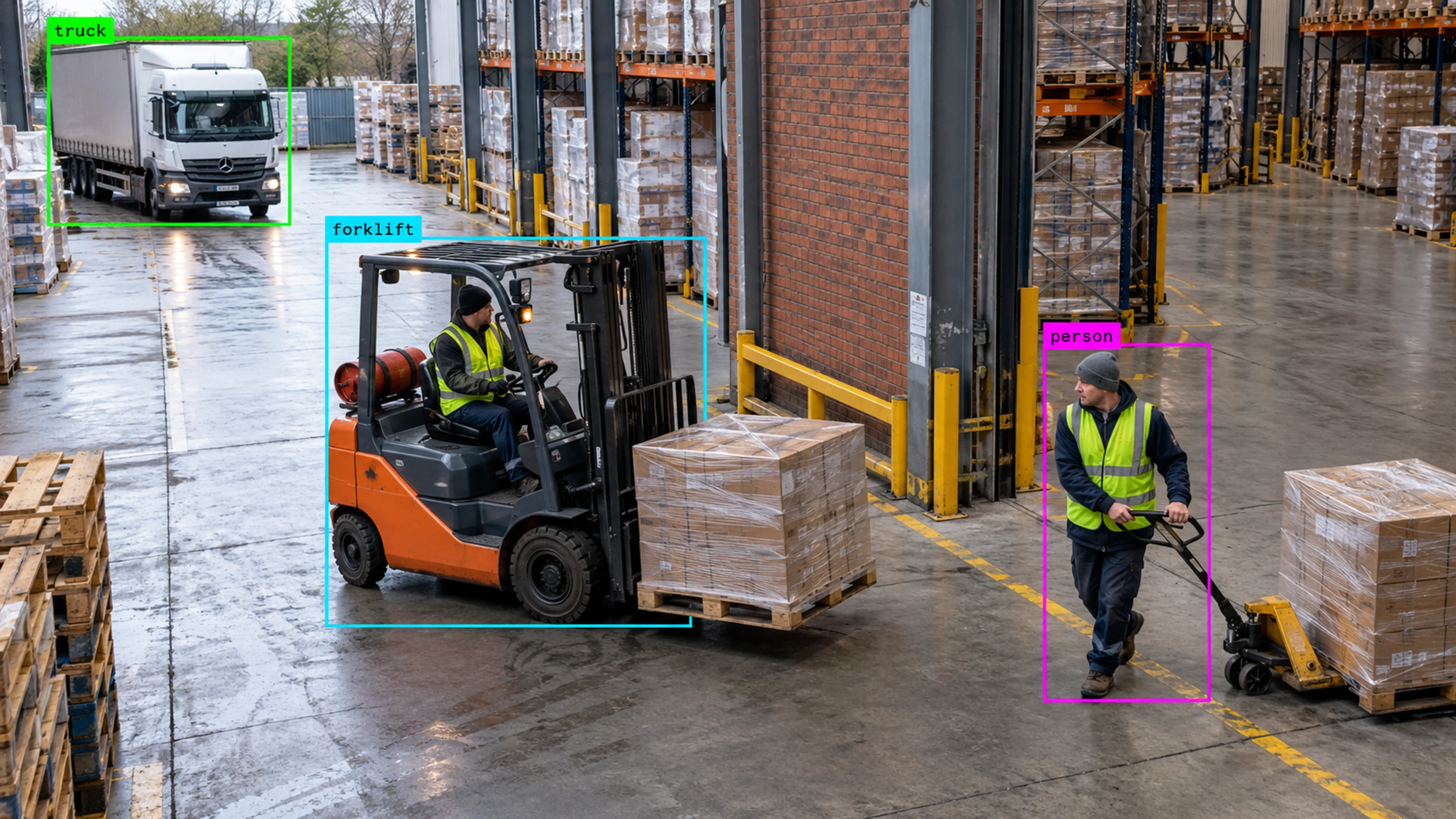
Forklift proximity at an aisle end
A forklift and a picker converge at a blind aisle end. The proximity alert goes to the floor lead and the crossing is added to the mirror-and-barrier review.
Industry
Monitor forklifts, loading areas, worker movement, vehicles, restricted zones, and operational flow.
Warehousing and Logistics
Illustrative environment · Warehousing & logistics
Overview
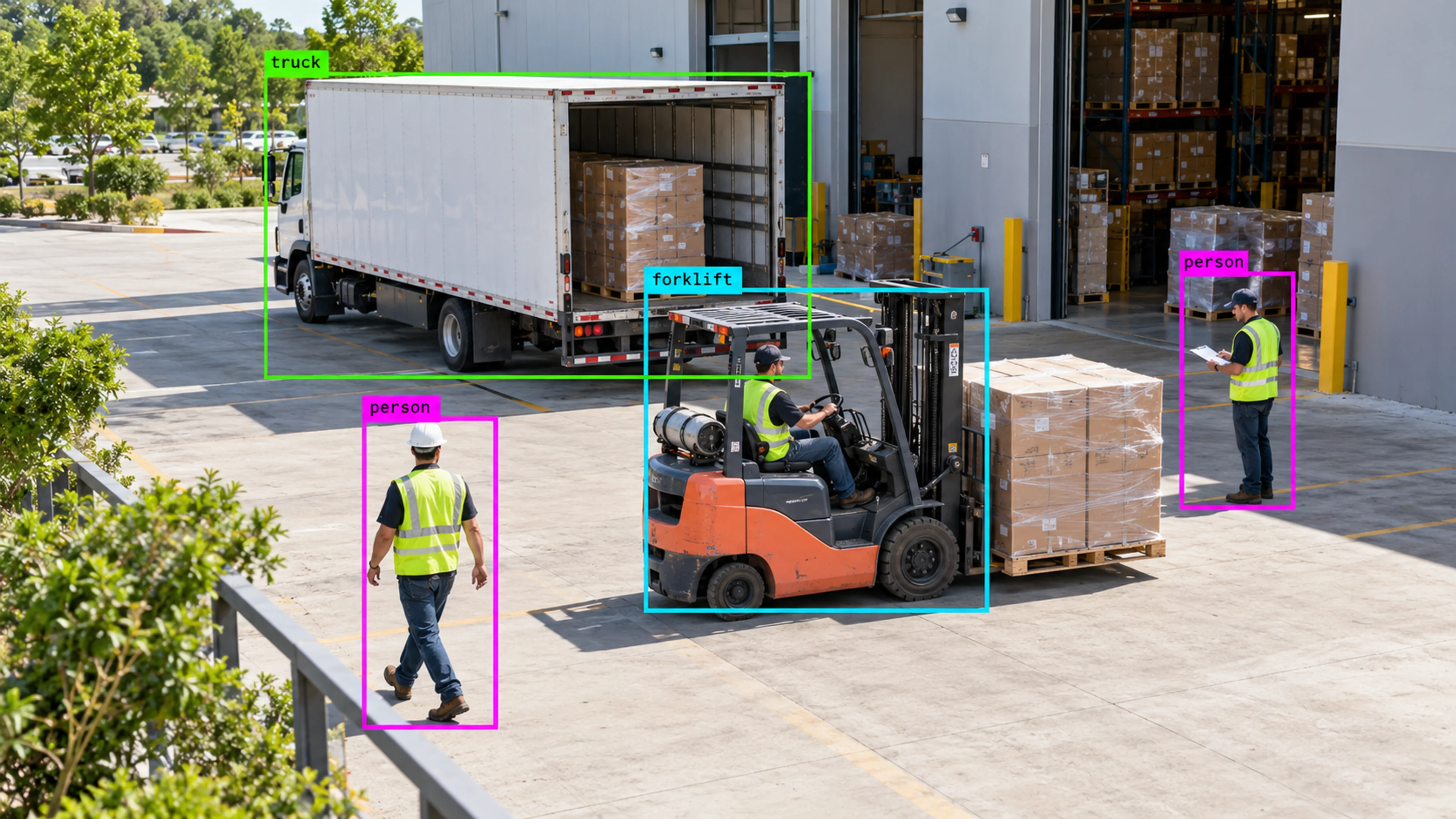
Warehouses and distribution centres combine fast-moving equipment, pedestrians and vehicles in the same space, often around the clock. Visrax uses existing dock, aisle and yard cameras to monitor forklift movement, loading activity, worker routes and restricted storage, and to flag congestion before it stalls dispatch.
Operations and safety leads share one view: proximity alerts for the floor, dock occupancy for dispatch and after-hours rules for security.
Throughput and safety are the same problem in a warehouse: both come down to where vehicles and people are at the same moment.
What it does
Each part is configured around your cameras, zones and schedules — the same system, set up for the way your site runs.
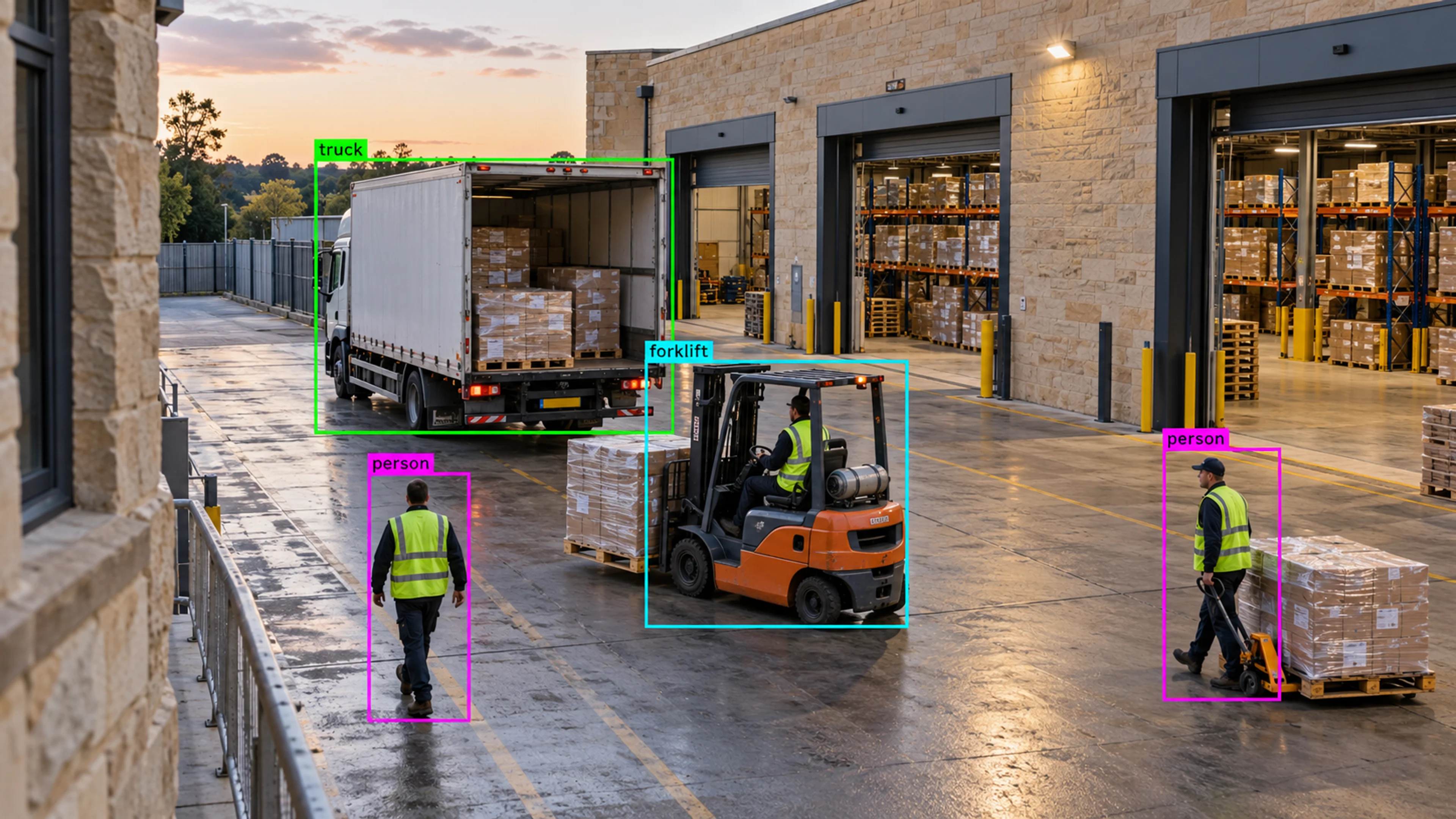
Forklift paths and proximity to pedestrians at crossings, aisle ends and dock edges, with alerts routed to the floor lead.
Dock and bay occupancy, vehicle dwell and congestion alerts to keep loading and dispatch on schedule.
Routes through the floor, dwell in zones and crossings of restricted lines to support safe-route planning.
Yard and gate throughput, queued vehicles and after-hours activity in staging and parking areas.
In practice
A forklift and a picker converge at a blind aisle end. The proximity alert goes to the floor lead and the crossing is added to the mirror-and-barrier review.
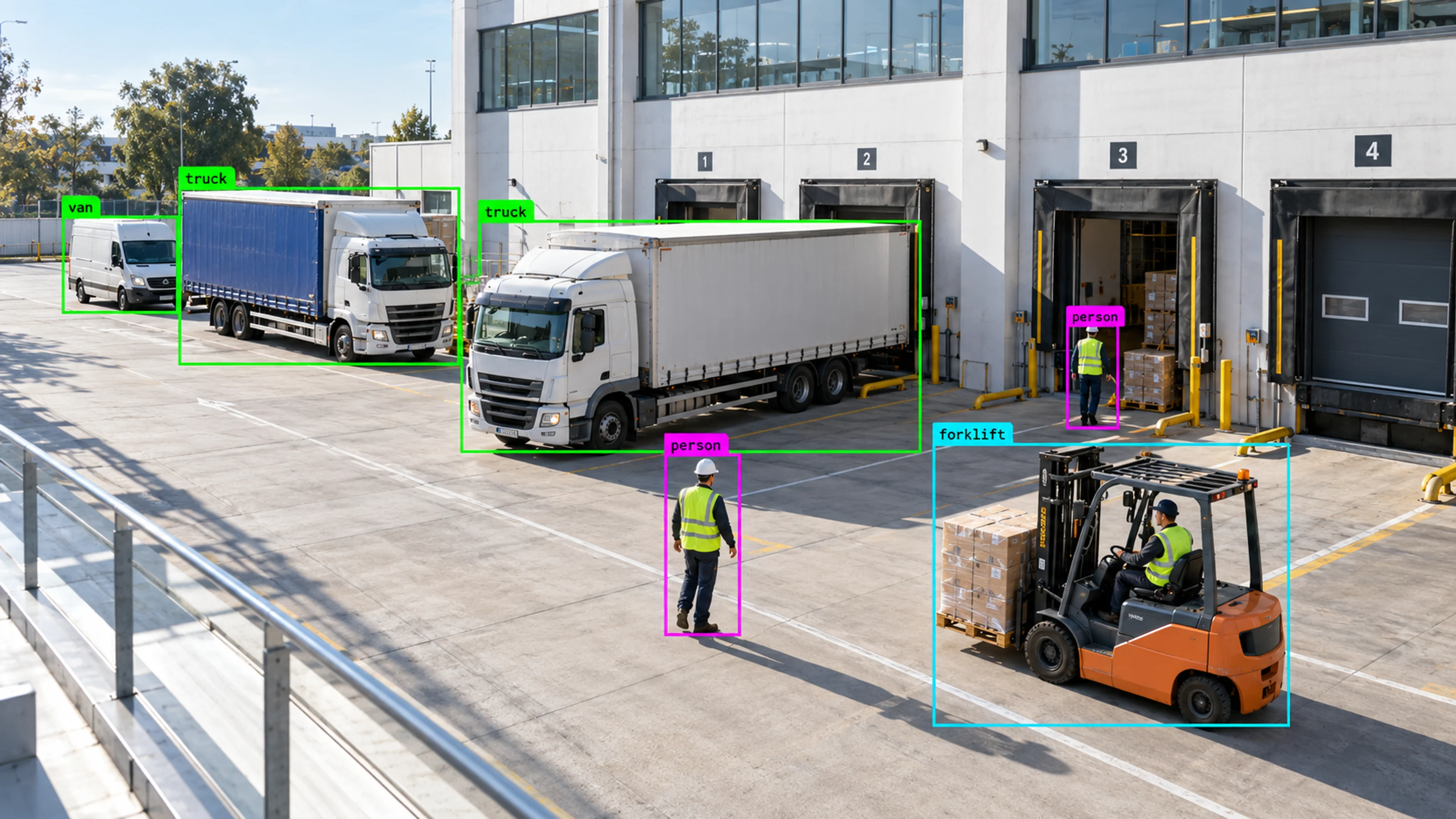
Vehicles waiting for a bay exceed the dwell threshold during the afternoon wave. Dispatch rebalances bays and the queue metric is tracked the following week.
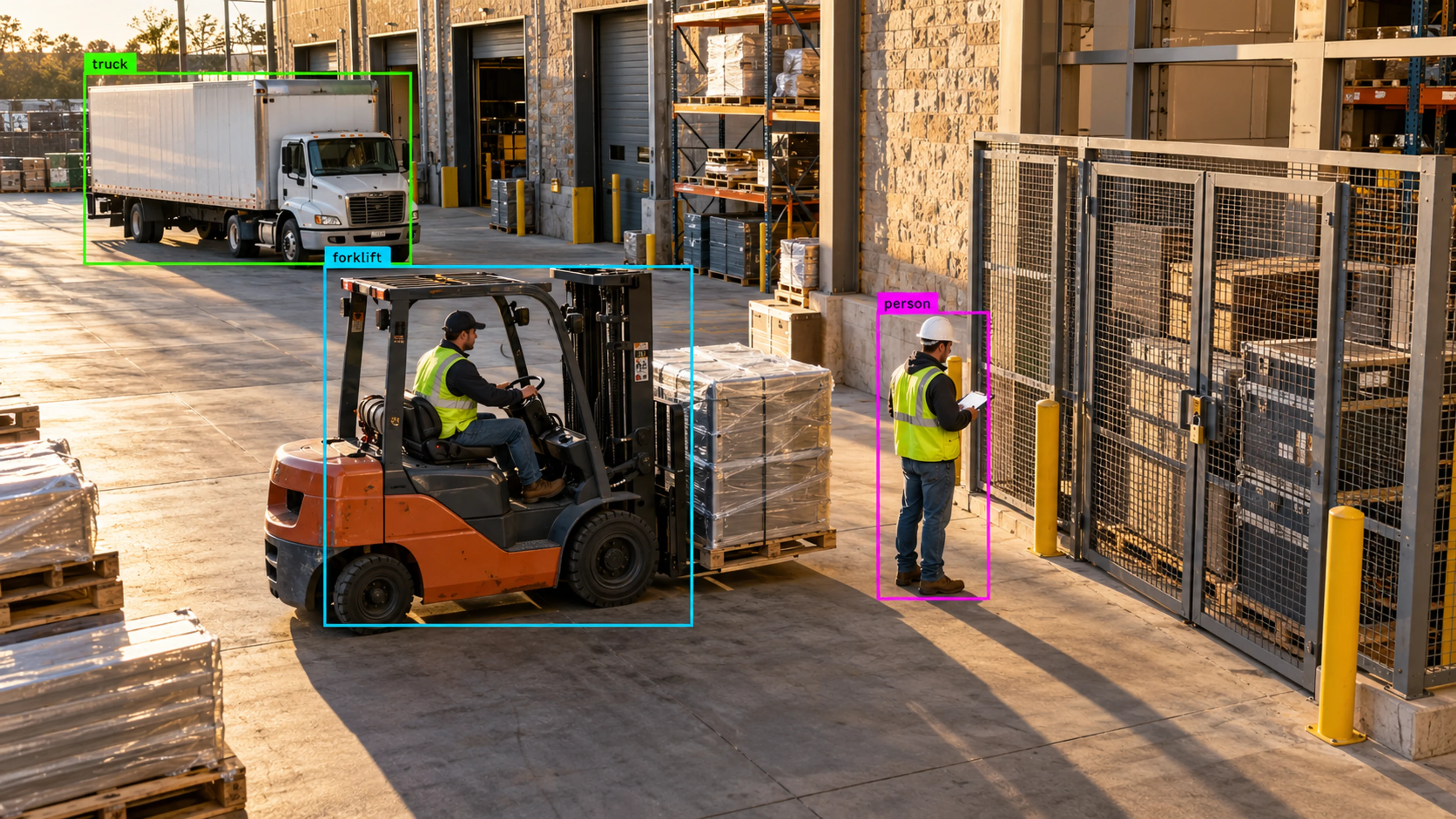
A high-value cage is monitored as a restricted zone. An entry outside the approved window raises an alert that is matched to a work order and closed.
Questions
Straight answers about how this is configured, what it needs and what it does not do.
Next step
Tell us about your sites and what you need to catch. We will walk through a setup that fits the way your operation runs.